 (2).png)
 7 hours ago
23
7 hours ago
23
The Texas Comptroller of Public Accounts is an idiosyncratic statewide office—a result of the state constitution’s intentionally decentralized executive branch. It’s part budget analyst, part tax collector, part financial auditor, and, increasingly so, part administrator of a grab bag of conservative policies that Republicans have enacted in recent years—from an anti-ESG investing law to, most recently and consequentially, the state’s private school voucher program.
The office has long been seen as a backwater and a waystation for ambitious politicians seeking higher office. But when wielded in the proper way—as an engine of good, clean, efficient government—as Bob Bullock did during his 16-year tenure in that office last century, it can be a powerful post. In the seemingly everlasting era of Republican one-party rule, however, it has devolved into a more overtly partisan executive subsidiary, one that’s highly deferential to the big boys of state government (governor, lite guv, and AG).
State Senator Sarah Eckhardt, an Austin Democrat and former Travis County judge, hopes to revive a more Bullockian comptrollership as she vies to become the latest Democratic nominee for the position, which is semi-vacant for the first time in 12 years. Glenn Hegar resigned from the office last year to take over the Texas A&M University system—and Governor Greg Abbott, in slippery legal fashion, replaced him with Republican state Senator Kelly Hancock as interim comptroller. Hancock is now running for election in a GOP primary field that also features Railroad Commissioner Christi Craddick and right-wing rabble-rouser Don Huffines.
Eckhardt, whose senate seat isn’t up this cycle so she gets a free-ride bid, hails from a political family that features prominently in Texas progressive lore—her father, Bob Eckhardt, was a crusading liberal congressman from Houston (and before that, full disclosure, one of the founding supporters of the Texas Observer), and her mother Nadine was a longtime activist.
The Observer spoke with Eckhardt about her family history, Bullock, and her vision for the “highest and best use” of the office she seeks.
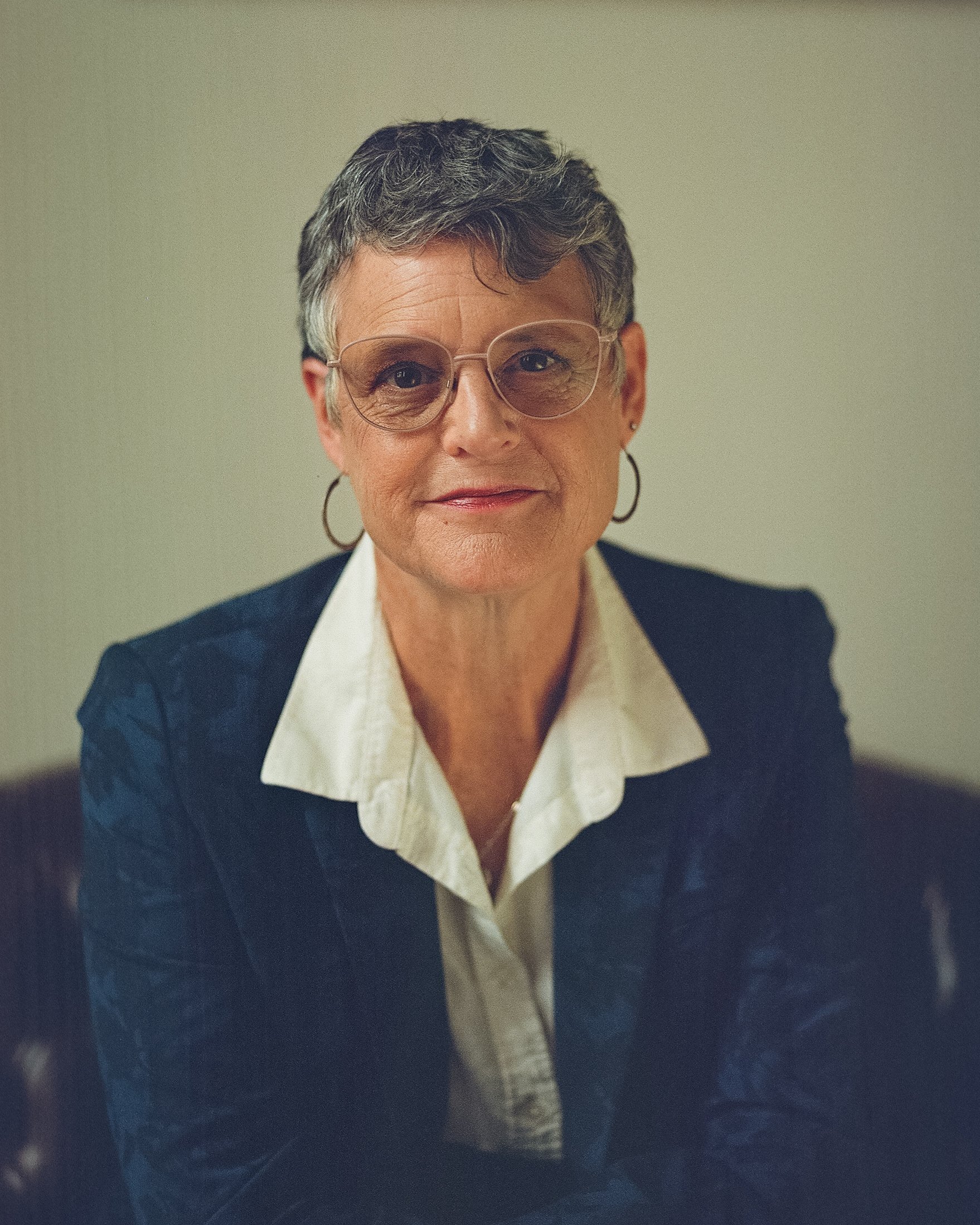 Eckhardt (Courtesy/campaign)
TO: What lessons did you learn from your parents about politics while growing up?
They really did believe that politics was our ticket to creating prosperity for all. That without well-run governments establishing a level playing field, we would revert to a survival of the richest.
How has that squared with your lived experience in politics in Texas in this modern era, both in Travis County and now in the Texas Senate?
I went to law school and went to public policy school so I could learn the actual skills necessary for building policy that will expand prosperity. Learning to apply those skills in Travis County was great because Travis County is such a fertile ground for innovation on expanding that prosperity.
But the reason why I chose to run for state government … [was because] state government was stopping us from being innovative, was stopping local government from governing. And the state government seems to be, on whole, pretty comfortable with devolving into a survival of the richest.
The comptroller’s office is kind of an odd statewide position. Quite a bit of power and responsibility have been added to the office in recent years while still flying under the radar. How do you see the power and politics of this position?
I would argue that it has not been given power, it’s been given assignments.
The powers of the comptroller actually are not being used robustly. The true power in that office, and this is what it’s intended for, the power of that office is to say “This is how much revenue you have.”And here are the long-term investments of the State of Texas, and here’s who’s benefiting most, least, and not at all from those investments. And the comptroller has not done much of that in the last several years.
We’ve not heard analysis of what happens economically long-term if we fail to invest in universal public education. The comptroller’s office has not provided analysis of the economic cost to people and to the public of the largest uninsured population in the United States. It took Public Citizen going into the stacks at the comptroller’s office [and the Observer] to get the story that a billion dollars in no-bid contracts are being distributed out of the governor’s office. The comptroller never raised any question about it.
So I would argue that the comptroller’s office has not been using its full power for the benefit of the people of Texas, whether Republican or Democrat.
Governor Abbott went out of his way to bend the rules to install the current sitting comptroller, former state Senator Kelly Hancock, who was put into that position ahead of a competitive contest for the vacated post. What does that signal to you about Hancock’s commitment to any sort of independence?
Well, it does indicate that Kelly cannot bite the hand that feeds him. He owes his position to the governor, and therefore he’s going to be working for the governor, not for the State of Texas. And I think that that is evident in what has happened since he assumed that role.
Now that Kelly is in that position, I think that both he and the governor are concerned that he won’t make it out of the primary because he’s not MAGA enough. And that’s the reason why Kelly took the assignments from the governor’s office to do some questionably illegal things to appeal to a MAGA base.
The Comptroller’s office does have a lot of power and authority to carry out oversight and transparency in government. What is your vision for using that office as a tool for those purposes?
Bob Bullock went in as comptroller and modernized the hell out of the office so that we could use the computer age to track where we were being ineffective or inefficient and also find out where we were being unfair or even corrupt. His work in the comptroller’s office was serious public service.
Next you get John Sharp who comes in on the shoulders of Bob Bullock. Sharp starts doing performance evaluations of state agencies’ productivity. And he was hugely successful at that.
Then Carole Keeton came in and she continued that type of work and she found some pretty ugly stuff when she was looking at the foster care system. We had moved into a Republican era at that point and, frankly, the one-party rulers did not like being called on the carpet by one of their own for something that was really ugly and remains really ugly.
So the performance review expectation was taken out of the comptroller’s office, but there’s no reason why, and there’s every reason why the Comptroller should step back into that robust role.
Its highest and best use is actually a daily and cyclical review of: What are our goals as a state for the people of Texas—and are we achieving them?
What is your read on the electorate right now and your plan for generating attention to a downballot statewide race?
I think that we are going to, as usual, get drawn into a lot of culture-war stuff. … [But] people are legitimately concerned that prosperity is not for them anymore. It’s for those who already are prosperous, and they’re going to keep it that way.
They’re tired of a pay-to-play politics. They are tired of one-party rule. They’re tired of being told where to pee and how to pray. Where to pee and how to pray is not nearly as important to them as not being able to afford their health insurance.
This interview has been edited for length and clarity.
The post Sarah Eckhardt Wants to Return the Texas Comptroller to the Bob Bullock Era appeared first on The Texas Observer.



 English (US)