 (2).png)
 3 hours ago
17
3 hours ago
17
Editor’s Note: This story was produced in collaboration by Truthdig and the Texas Observer.
On a cold winter morning in Johnson County, at the southwestern edge of the booming Dallas-Fort Worth Metroplex, 52-year-old Lee Oldham stands beside the Pleasant View Elementary School and wonders what the drilling waste he helped lay underneath might mean for the children inside. Surrounding the school is the partially complete 2,500-home Silo Mills development that will supply it with children and that is also built atop drilling waste, according to satellite maps and interviews. The first families moved in two years ago.
“They weren’t telling anyone this was a radioactive material. They told us it was safe,” said Oldham, who worked as a dozer operator here from 2009 to 2011, laying waste that he said was generally 6 inches to a foot deep, but in spots as much as 2 to 3 feet. In 2015, Oldham returned to the same area doing reclamation work that involved putting 1 to 2 feet of local dirt back over the waste.
Hundreds of homes have already been built in this subdivision, and many are occupied, with cars parked in driveways and trampolines in yards. Pleasant View Elementary School is part of the Godley Independent School District and already has about 500 students. The elementary school’s website shows photos of smiling children, a list of upcoming and recent events including chess club meetings, an area spelling bee, field trips, and a celebration marking the 100th day of school.
School officials say the developer conducted a “Phase 1 Environmental Site” assessment prior to completing the school in 2022.
“The assessment indicated that no evidence of recognized environmental conditions was identified in connection with the subject property and that no further action was required,” Superintendent Rich Dear said in a statement provided to Truthdig and the Texas Observer by email. “The Pleasant View Elementary School site was developed following voter approval of Godley ISD’s 2021 bond election and the donation of the property by the developer.”
Students began attending the campus in January 2023.
Dear identified Terra Manna, LLC, as the site developer and said that the company could provide the assessment. Terra Manna did not reply to questions sent through an online contact form, and phone calls to the company’s main line requesting the Phase I Environmental Site Assessment went unreturned.
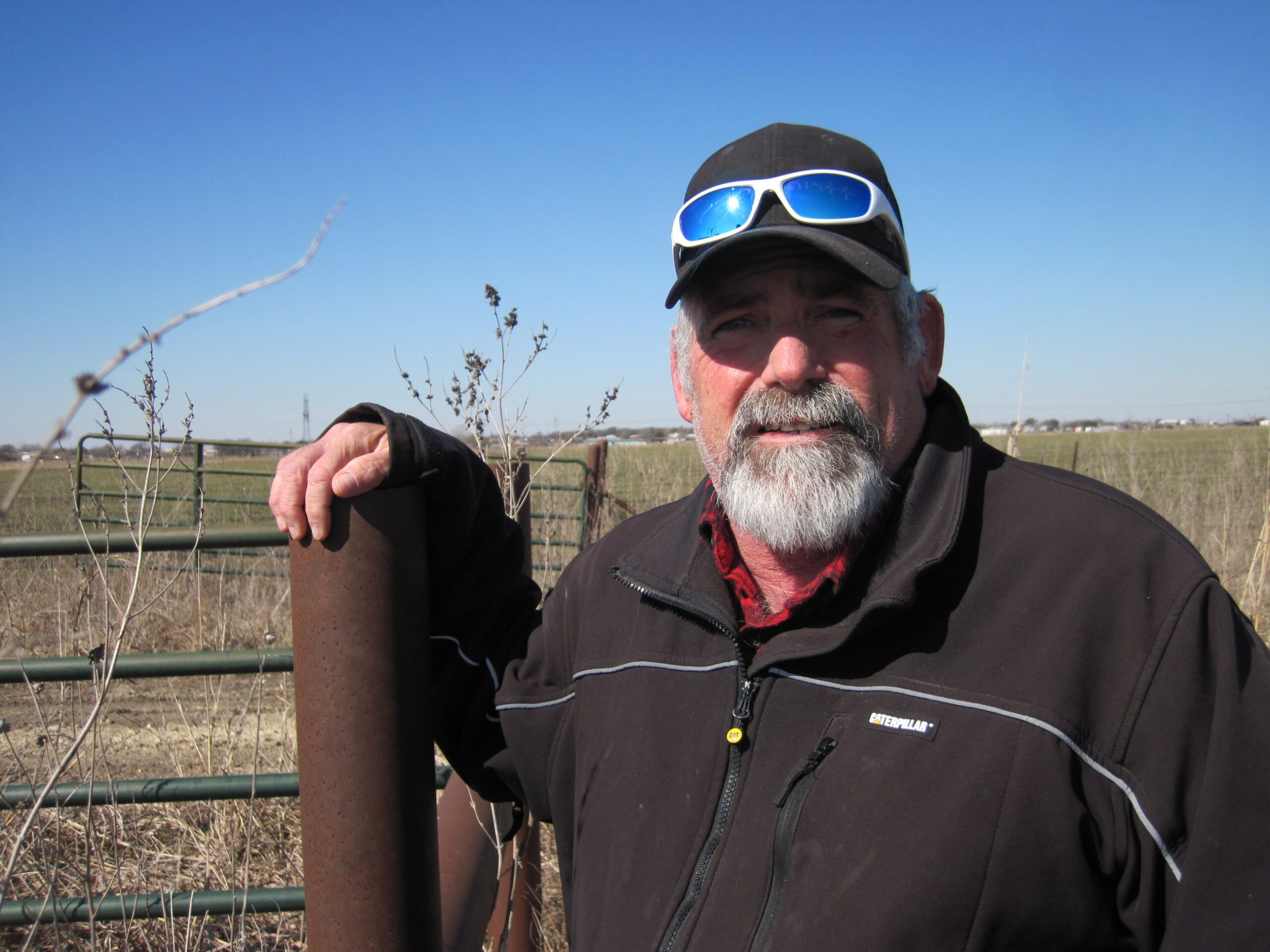 Lee Oldham earlier this year at the site where he worked (Justin Nobel)
Oldham’s concern for the residents of Silo Mills is amplified by his own faltering health. In interviews, he said he suffers from bone deterioration in his jaw and loosened teeth, as well as neck vertebrae that “are fusing together like a 70-year-old woman with severe osteoporosis.” He believes these conditions are connected to his work with oil and gas waste.
After one particular day working with waste in this area 11 years ago, Oldham said a series of horrendous lesions—bright-red scaly clusters—erupted across his legs and torso. “They consumed my body in a week’s time,” Oldham said, and they continue to appear unexpectedly. Radium can be elevated in oil and gas waste, according to the federal Environmental Protection Agency (EPA), as described at the agency’s webpage on Technologically Enhanced Naturally Occurring Material in the oil and gas industry, creating potential risks for workers that “work directly on top of uncovered waste sites” including “inhalation of radioactive dust.”
Citing facts that are supported by medical research, though doctors have not yet diagnosed the cause for his myriad ailments, Oldham said: “They call radium a bone-seeking carcinogen, and it has absorbed into my bones.” The threat the waste poses to others has inspired him to speak out and tell his story—and to hold a meeting with Johnson County Constable Troy Fuller and an environmental crimes detective named Dana Ames.
“The constable’s office is aware of the complaint, is investigating, and is taking it very seriously,” said Ames, who previously held large corporations accountable for spreading “forever chemicals”-laden sewage sludge on farms and fields in Johnson County, a story that received national attention and continues to unfold in federal court.
Oldham’s story begins with the opening of the Barnett Shale, an oil and gas-rich formation that was cracked in the early 2000s using the then-novel intensive drilling method now known as fracking. The Barnett was the first formation in America where these techniques were used, and it marked the inauguration of a fracking boom that would metastasize across the United States and reshape global energy politics. But before any of that came to pass, drillers in Texas had to convince the locals. “Get behind the Barnett,” instructed highway billboards, sponsored by Oklahoma-based driller Chesapeake Energy, with some featuring Texas-born actor Tommy Lee Jones. (Another billboard read: “Barnett Shale Helps Our Schools.”)
Oldham practically grew up behind the wheel of a dozer. He operated his first machine at age 6 and was moving dirt by 10. When news of the Barnett Shale came roaring through Johnson County in the mid-2000s, he found an industry in great need of his talent, and he took a job with a local oil and gas service company called Excel Environmental, LLC, for which he worked at the Johnson County site where the school now stands.
Excel Oilfield Environmental, founded in 2008, is based in Cleburne, the county seat of Johnson County, according to the Texas Secretary of State. A federal Department of Transportation database confirms that the company used the business name of Excel Environmental Services; carried oilfield equipment, saltwater and mud; and has employed 19 drivers. The phone number listed on the page is now out of service, and no one could be immediately reached for comment. Oldham said that Excel is no longer in business.
“I loved oil and gas, and I took pride in the job,” Oldham said. He and a growing legion of workers signed up to join the energy revolution. Many drilling jobs paid six figures, offering a chance to put food on the table and buy a truck or home, all while getting America off of foreign oil. What many didn’t know was that the fuel-rich black shale could be radioactive.
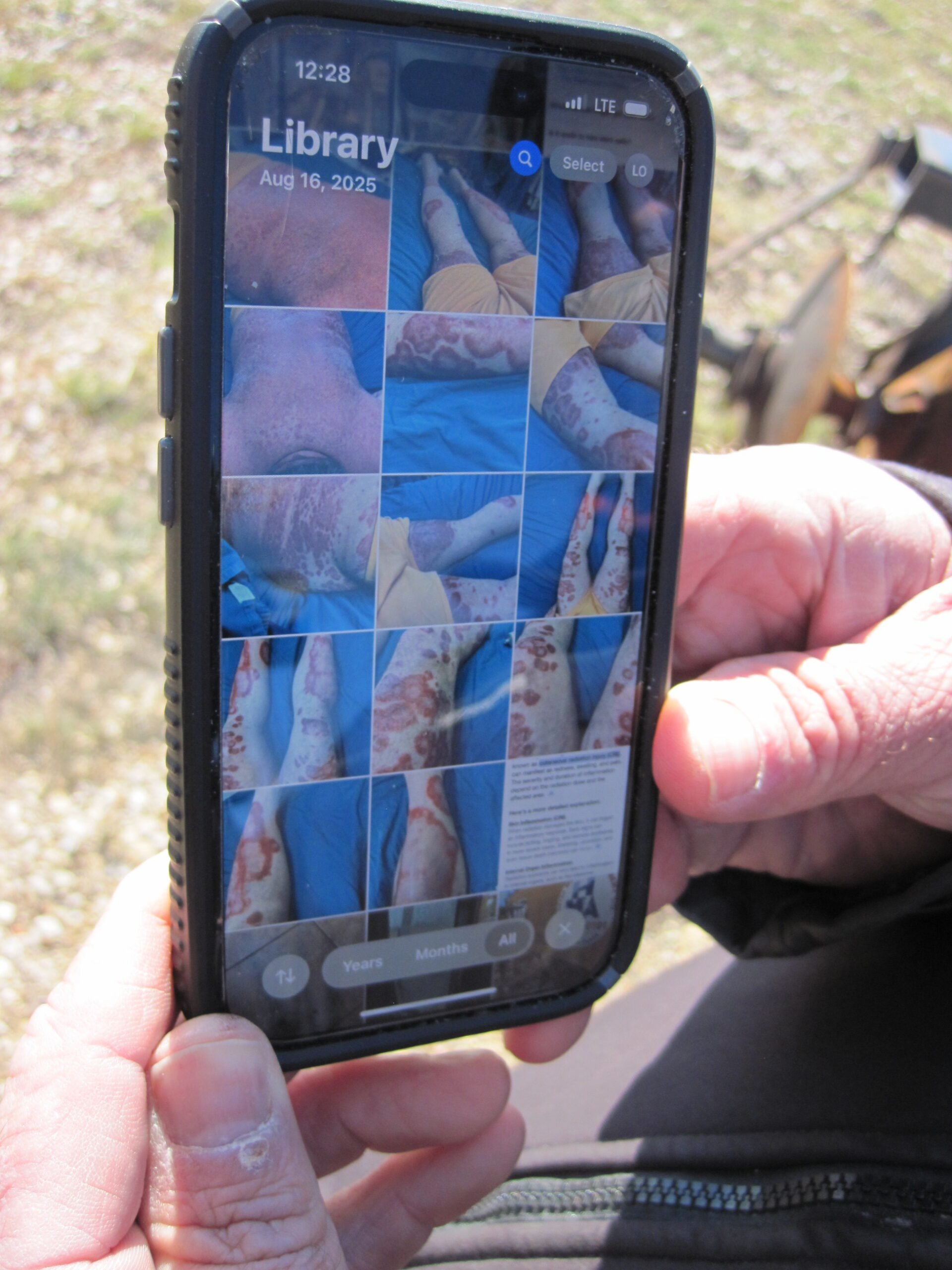 Oldham shows photos of himself from last year (Justin Nobel)
There is “a fair positive relation between oil yield and uranium content,” stated a 1960 report on black shales conducted by the U.S. Geological Survey for the Atomic Energy Commission. The geologists suggested that black shales contained so much uranium they could even be mined for the nuclear fuel, with the oil “a possibly important byproduct.” Drilling horizontally through the shale to tap its fuel would inevitably bring broken-up pieces of it to the surface. These drill cuttings, together with drilling muds—a slick chemical-infused mixture that provides lubrication and structural support in drilling a well—form a copious waste stream called drilling waste. This material surges back to the surface as the drill bores down, with each well drilled producing between 1,000 and 3,500 tons.
This drilling waste is too thick to inject underground, as industry does with problematic liquid waste streams such as produced water and flowback. Instead, it is often disposed of in pits, placed into landfills, laid under county roads (“road-spreading”) or spread across farm fields. In Texas, oil and gas companies have been distributing the waste for more than 50 yearson land where crops are grown and cows graze, a practice referred to as “land-spreading” or “land-farming.” This last method was used across several hundred acres of land, over which now sit Pleasant View Elementary School and the Silo Mills development. In Texas—as well as in Oklahoma and some other states—land-spreading is legal despite the science showing the waste may contain elevated levels of salts, carcinogenic compounds, forever chemicals, heavy metals and radioactivity.
“Drilling mud is a witches’ brew of chemicals,” said Blake Scott, president and CEO of Waste Analytics, a Texas-based firm that provides data on drilling waste. “Society will have to pay for the cleanup, and the company that made all the money just closes up their doors and they’re on down the road. I have been screaming about this forever.”
Scott estimates millions of pounds of drilling waste have been land-spread across the Barnett, and he said “Johnson County was one of the dumping grounds.”
David Carpenter, co-director of the Institute of Health and the Environment at the University at Albany and a nationally renowned public health expert, echoed concerns about the North Texas site. “You certainly are going to have all three of the major radioactive elements that can be present in black shale in that waste—uranium, thorium and radium,” he said. “Spreading it around fields then building homes and a school on top does not seem like a rational thing to do.”
The Texas Railroad Commission (RRC), the state’s oil and gas regulator, defines landand-spreading as“a method of treatment and disposal of low-toxicity wastes,” which “are spread and mixed into the soils to promote reduction of organic constituents and dilution and attenuation of metals.” The agency describes using “the soil-plant system to provide a safe means of disposal without impairing the potential of the land for future use.”
The RRC claims echo those made by the industry that the practice is good for the land, even as testing and limits are imposed on salts and, at some larger sites, on heavy metals, hydrocarbons and the radioactive element radium.

However, some federal government data contradicts this rosy view. According to a 1996 Department of Energy report on radioactivity risks posed by the oil and gas industry, land-spreading “presents the highest potential dose to the general public.” It may “result in a total dose that is unacceptable”—on the order of 3,000 millirems per year under the study’s worst-case scenario, or 30 times the public dose limit under current Nuclear Regulatory Commission rules, the report said. Yet drilling waste is considered nonhazardous, thanks to the 1980 Bentsen and Bevill Amendments to the Resource Conservation and Recovery Act.
In 2013, researchers at the University of North Texas Health Science Center published the results of a study that tested the waste in containment pits, where material is often held before it is land-spread, in the core area of the Barnett. The researchers discovered that radioactivity levels in one sample “exceeded regulatory guideline values by more than 800 percent.” Placing the material on land, the authors found, can raise radiation levels leading to “contamination of groundwater, soil, animals (domestic and migratory), and humans. …. Health complaints related to low-level radiation sickness, common to occupational workers, may be overlooked by medical professionals who do not anticipate an industrial-type exposure to patients living within these communities.”
Lead co-author Alisa Rich, an environmental toxicologist specializing in occupational exposures, called the report “one of the most illuminating papers that ever hit the oil and gas industry” and said the industry would rather people not know about these risks.
“It’s common knowledge that in the oil and gas industry, as in every type of mining, there are elevated levels of radioactivity,” Rich said. “Coming from a toxicology perspective, there are multiple avenues of exposure: inhalation, ingestion, dermal exposure.” Adverse health outcomes would include the same type of symptoms that Oldham has been experiencing, she said, “including effects on bone, blood, lungs, teeth and skin.”
Last month, 13 years after the issuance of that report, a former Department of Energy scientist named Yuri Gorby took several soil samples from the right-of-way beside Silo Mills Parkway, a few hundred yards north of the new elementary school. Some samples were taken using an auger, in order to gather material several feet below the surface.
Testing for radium was done by Sheldon Landsberger, a nuclear engineer at the University of Texas at Austin’s Nuclear Engineering Teaching Lab. “From the samples we have tested, the levels we are seeing are elevated, but below the 5 picocuries per gram regulatory limit,” Landsberger said.
An EPA document from 2000 regarding radioactivity-contaminated superfund sites indicates soil standards that trigger cleanups for radium are 5 picocuries per gram for soil at the surface, and 15 picocuries per gram for the subsurface, which are relatively low levels and demonstrates that even minor upticks in radium can be cause for concern. Landsberger suggested a more thorough analysis is needed in order to determine where radioactivity levels may be highest, background radioactivity levels for the area, and also how the waste has been profiled in Railroad Commission records.
Gorby also argued that extensive tests are needed given the residential use of the site and the presence of an elementary school. “Eighteen inches of soil is a Band-Aid,” Gorby said, referring to the approximate amount of dirt that Oldham helped lay at the location. “You have a known source of radiological materials that has been remediated with a foot and a half of dirt. You should not be putting crops there, and you should definitely not be putting homes and a school. What is needed is a complete hydrogeological assessment of this site. … Based on what you find, it should be considered a dump site.”
Over time, the radioactive gas radon, which comes from radium that is naturally occurring in the earth and would be expected to be elevated in areas spread with waste containing black shale drill cuttings, could build up in basements and lower levels of homes and buildings, Carpenter, the public health expert, said. “Just because samples are not immediately radioactive doesn’t mean there isn’t a radiological concern here. Concentrations vary, and you are spreading radioactive material that is going to last for centuries.”
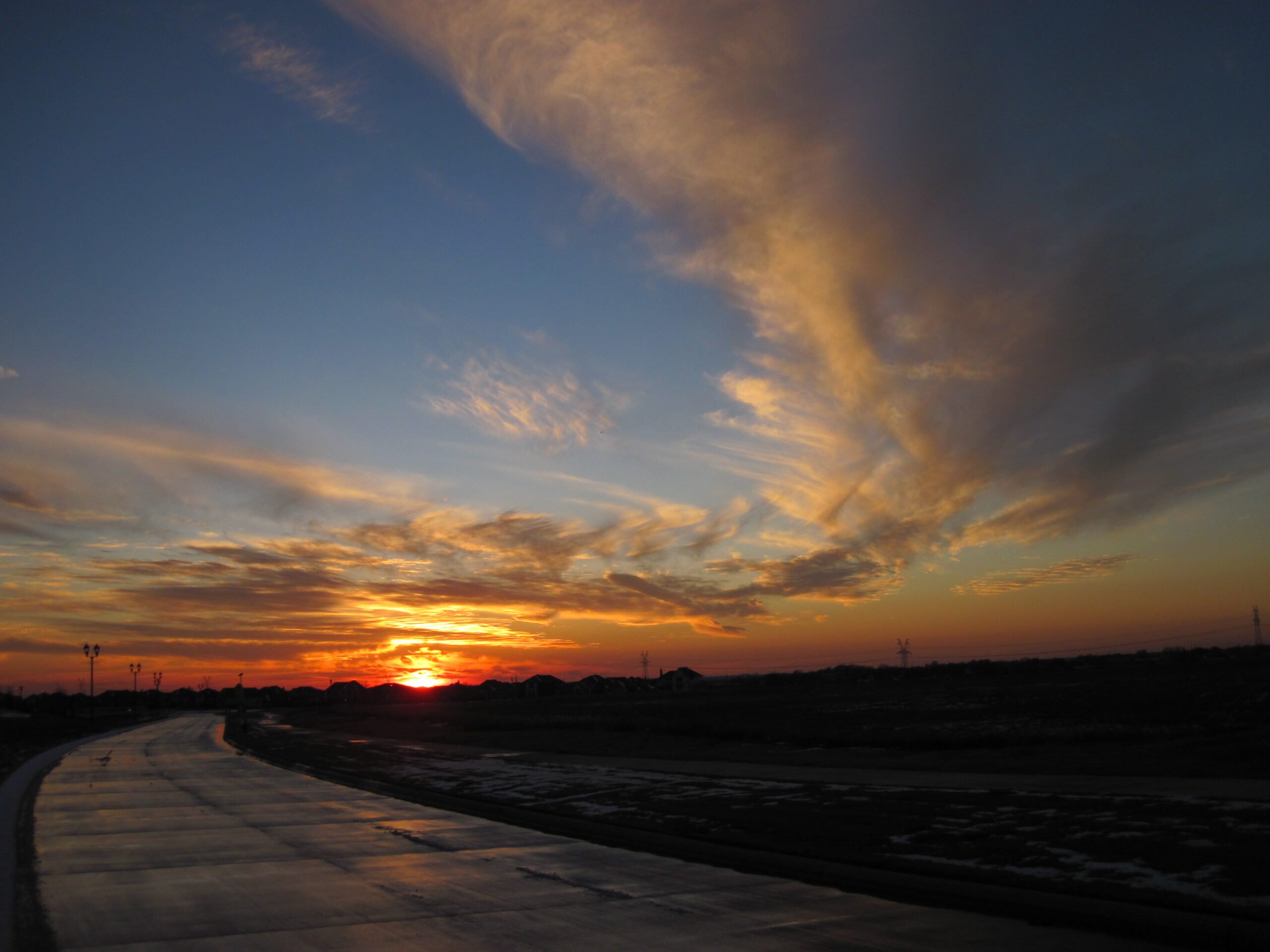 The housing development at sunset in late January (Justin Nobel)
The Silo Mills development, an 840-acre master-planned development, is a joint venture of Terra Manna, the Southlake real estate developer, and a private equity firm, Prophet Equity Partnership, according to corporate websites. Neither company responded to requests for comment made by phone, email and online contact form.
“Terra Manna focuses on the acquisition of problem properties and adds value to them by overcoming obstacles, such as flooding, access, drainage, utilities, and zoning,” reads the company’s website. Prophet Equity boasts of using “a Holistic Value Creation” strategy to “drive dramatic value creation.”
The Silo Mills development was touted in an October 25, 2021, article, published in the Cleburne Times-Review and republished on the Prophet Equity website, that described the groundbreaking for the project that would provide “affordable quality housing” for the booming Dallas-Fort Worth region. Homes are presently being listed as starting in the $430,000 range. Resident amenities include a resort-style swimming and entertainment complex, playgrounds, trails and a fishing pond. The crown of the development, according to Silo Mills development website: Pleasant View Elementary School, “open to the young minds of Silo Mills!”
The school was designed by Langan, a multinational engineering and environmental consulting firm headquartered in Parsippany, New Jersey, that did not respond to questions sent through an online contact form regarding whether it knew the school was built on a site containing oil and gas waste or if testing was conducted.
On a computer screen in his Longview office, Scott, the Waste Analytics CEO, used the “history” function on Google Earth to show how the land under the school and Silo Mills development was farmland in the mid-2000s. In 2009, land-farming operations appear to begin, and by the mid-2010s evidence appears of waste being spread across the land, organized into rectangular lots called cells. In 2021, construction on the school commences, and by 2024 the school appears complete, as the 2,500-home development takes shape.
“There are multiple questions from the real estate side of things that should be answered,” Scott said. “Did the developers know it was there? Did they convey it to home buyers? And if so, what type of language did they use to cover themselves? Because it is almost guaranteed that, on some level, the liability was severed and passed along to homeowners.”
The RRC has not replied to questions about whether or not it is legal to build homes and schools on top of drilling waste, whether or not the agency thinks the practice is safe, and how many sites like this it believes may exist across the state.
In his drives across the state, Hawk Dunlap, a well control specialist with 35 years of oil field experience who is currently running as a Republican for a seat on the RRC, said he has discovered “huge gaps between how things are permitted, and how things are handled.”
“There have been a lot of dropped balls,” said Dunlap, “and this problem is going to continue as the population of Texas keeps growing and the suburbs expand.”
Oldham still operates heavy equipment, though no longer in the field of oil and gas. He’s doing his best to hold his life together, but he said his health conditions make his profession increasingly difficult.
“My body is going downhill,” he said, blaming exposure to the drilling waste. “Yet my body is how I earn a living.” Oldham said that physicians he consulted generally have ignored his claims of being exposed to elevated levels of radioactivity while land-spreading oil and gas industry waste. He has no diagnosis confirming his suspicions.
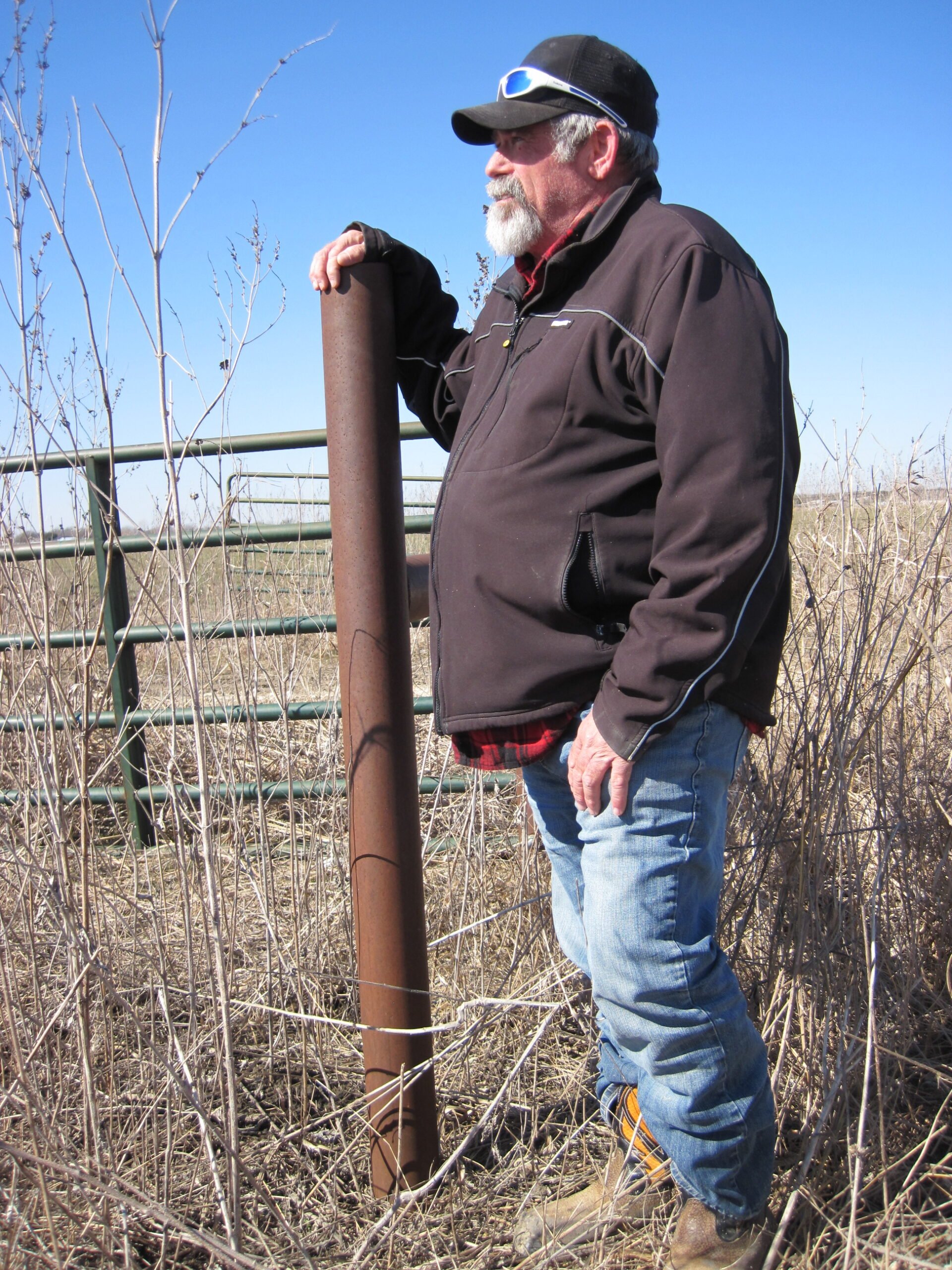 Oldham (Justin Nobel)
Oldham first began to believe he’d been poisoned in 2011, when he said a local scrapyard took the rare step of rejecting worn-out metal tracks from a small piece of earth-moving equipment that he’d been using to plow the drilling waste into the land. That equipment, which had been used only to land-spread drilling waste at the land-farm in Johnson County, set off a Geiger counter at the scrapyard, he said.
“We check every load that comes in” with a radiation detector, said Willie Fleece, at A & A Iron & Metal, in Cleburne, where Oldham said the tracks were rejected. Fleece did not recall the specific incident, but he said the shop was very familiar with the pervasiveness of oilfield radioactivity.
“Radiation could be in anything,” he said. “It could be in the pipe, it could be in the soil, it could be in the water. Radiation absorbs into things”—so Oldham’s story was plausible to him.
Soon, Oldham was trawling scientific literature and finding decades-old geology papers that seemed to back up his suspicions.
If the waste was radioactive, reasoned Oldham, what about his coworkers who spent 10 to 12 hours a day cleaning it out of trucks—who were daily cloaked in the stuff without knowledge of or appropriate protection against the toxic substance? Still working for the now-defunct Excel at the time, he mentioned his concerns to bosses and requested radiological testing, he said, and was shipped off to a menial job in Arkansas. Former company officials could not be located to confirm Oldham’s account. He never filed for worker’s compensation, nor did he call the federal Occupational Safety and Health Administration or any Texas regulatory agency because, he said, “I was in a state of fear—I was in survival mode.”
His concerns resurfaced when he noticed that the elementary school was being built on the same land he had spread with waste. “It was bad enough houses were being built on it,” said Oldham, “but when I seen an elementary school, my stomach just dropped.”
In an interview, Carpenter said the inhalation of radioactive dust is “absolutely” a concern for workers like Oldham. “When there are hazards that haven’t been completely acknowledged and identified, the workers are the ones most at risk.”
Oldham remains convinced that the problem is much bigger than just his story. In November 2014, residents in Denton, two counties north of Johnson, voted to ban fracking, citing concerns over toxic pollution and alleged links to cancers and other illnesses. This was an extraordinary move for any community in oil and gas country, let alone one in Texas. But the following year, Texas House Bill 40 neutralized the ban by granting the state exclusive jurisdiction over the oil and gas industry, and additional restrictive legislation followed.
Oldham regrets not being part of that key political moment. “I was in Arkansas and totally separated from anything happening down in Texas, and because of everything that had happened to me I was a little gun-shy. But now, knowing what is happening to my health, and seeing kids and young families on top of this waste, I had to speak up,” he said.
“The dirty secret needs to be brought into the light.”
The post How Radioactive Oil and Gas Waste Could Lie Beneath a North Texas Elementary School appeared first on The Texas Observer.





 English (US)