 (2).png)
 2 hours ago
6
2 hours ago
6
The two shooters during the killing of Alex Pretti in Minnesota on January 24 were Customs and Border Protection (CBP) agents from South Texas. The same place I’m from.
For years, local activists and community leaders here have demanded the demilitarization of the border. For decades, natural landscapes, rivers, and deserts have been used as a means, along with the border wall, to violently deter and kill migrants. For generations, Border Patrol has maintained a high presence in South Texas and has operated with minimal oversight and accountability, shaping a culture in which terrorizing immigrants and their families has become part of our daily life.
That this culture traveled with these agents far from the border underscores how practices developed in the name of immigration enforcement are no longer confined to border communities. They are exported.
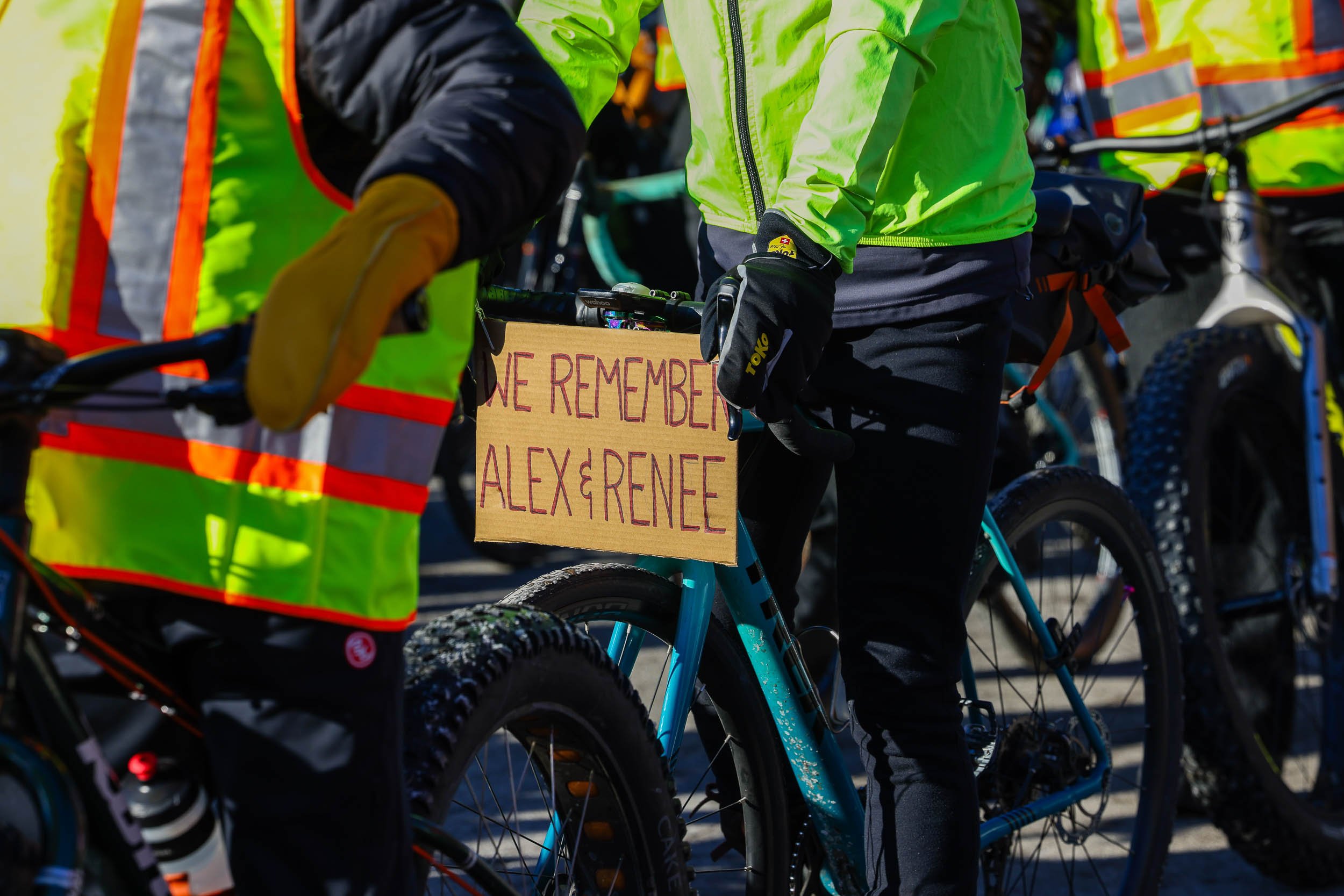 A protest sign in Minneapolis on January 31 (Shutterstock)
I grew up in Laredo in a working-class family less than a mile from the Rio Grande. For so long, we have normalized CBP agents keeping a watchful eye on us and our neighborhoods. I now live in Brownsville, about four hours downriver. South Texas has not only been my home for most of my life, but it has also been the breeding grounds for evolving tactics of policing, racial profiling, and surveillance.
Many of us here live with the mechanization of militarization and surveillance embedded into our psyches. We know where the checkpoints are. We warn one another when the Border Patrol is nearby. In public space, we adjust our bodies and behavior, attempting to go unnoticed, offering smiles of compliance as a way to disarm.
As a kid, I witnessed the contrast between the Border Patrol’s green-striped SUVs and my mother, a Mexican immigrant herself, who handed out sandwiches wrapped in tin foil and disposable cups filled with Kool-Aid to border-crossers—often men, who looked parched and carried nothing more than a backpack. I heard my father call them mojaditos, and he would demand my mom stop giving them food. But my mother kept doing what she and I felt was the right thing. I knew that she saw herself in these men.
Border agents have killed before. In 2018, Romualdo Barrera shot a young Indigenous woman from Guatemala in the head as she was hiding from sight in Rio Bravo, near Laredo. There have been many violent murders at the hands of Border Patrol agents. This is not an aberration but part of a broader federal apparatus built and refined over decades. That apparatus is sustained by enormous public investment and a parallel infrastructure of propaganda, one that manufactures public consent for an economy and governing logic based on framing migrants as criminals.
When I was a kid, I loved peering over the rails of the international bridge, or the edge of Tres Laredos Park, to watch the river. One day, I witnessed a man struggling for his life, his head barely above water. He was pulled out by CBP and was instructed by the officers to enter their passenger transport van. Why couldn’t he just stay on this side?, I thought as a child. I understood the absurdity that was border policy at age 7.
I learned that brown skin, worn clothing, wet garments, and walking could be a sign that you didn’t have legal permission to inhabit this side. Racial profiling and classism informed surveillance operations on the border.
Texas has a long history of policing mexicanos and Native peoples. The Tribal Chairman of the Carrizo/Comecrudo Tribe of Texas says that his Native ancestors would hide their identities to avoid being killed. After the United States and Mexico became sovereign nations, Texas was stolen and annexed, and an influx of Anglo settlers immigrated into South Texas, working alongside the Texas Rangers to instill terror in the local mexicanos. All to create an industrial agriculture-based economy through which the new local white power structure was created.
The Border Patrol was established in 1924. Agrobusinessmen needed an exploitable labor force to seed, steward, and harvest. The Border Patrol, along with the Texas Rangers and agrobusinessmen, collaborated to create a disposable and temporary labor force, one that could be controlled through the constant threat of deportation.
In her book Migra!: A History of the U.S. Border Patrol, Kelly Lytle Hernández describes the early majority of Border Patrol agents as white working-class and landless men who joined as a way to advance themselves into the power structure. She tells of early Mexican Border Patrolmen, who came from middle-class families and sought proximity to the white elite. In the racial structure of South Texas, your status as a Border Patrol agent could afford you more power.
These middle-class mexicanos embraced U.S. institutions and capitalism. Meanwhile, the migrant, brown, and non-English-speaking people became a barrier, perceived as getting in between their access to whiteness.
“We are not Mexican; we are Mexican-American,” was a sentiment I heard echoed in my Laredo high school in the early 2000s. I am not like them; they didn’t come the right way. I internalized this racism, rejecting Spanish in middle school, afraid of being perceived as poor or uneducated. So many of us on the border have internalized racist narratives about ourselves.
Joining the Border Patrol has historically been and still is a marker of social mobility, affording people here the chance to earn a stable living wage. But doing this work requires people to fail to form their own belief systems, and to comply with the propaganda the immigration enforcement machine creates. Agents must learn not to see themselves in the people they police. That separation is not incidental; it is necessary.
In this way, the Border Patrol becomes more than employment. It becomes an identity, a form of self-erasure rooted in the assertion: I am American, not Mexican.
When I read the description of one of the two agents, Jesus Ochoa, in Propublica, including his interest in collecting guns, I was struck by how much he resembled other men in our community. For so long, CBP and the U.S. Army have been recruiting Mexican men in our community. Young men are tracked into manual labor jobs, the military, or CBP.
The South Texas border apparatus is like a factory-conveyor belt; our culture is extracted, and acceptance is offered through guns, uniforms, and allegiance. Forming an identity is so critical to the human experience, and propaganda offers one.
These dynamics also perpetuate systems of exploitation within our communities. A large number of Border Patrol agents are from our communities, which have large undocumented populations, and many even have undocumented relatives themselves. Yet the border is a hostile environment for undocumented people. This region has a high number of wage theft cases involving undocumented workers.
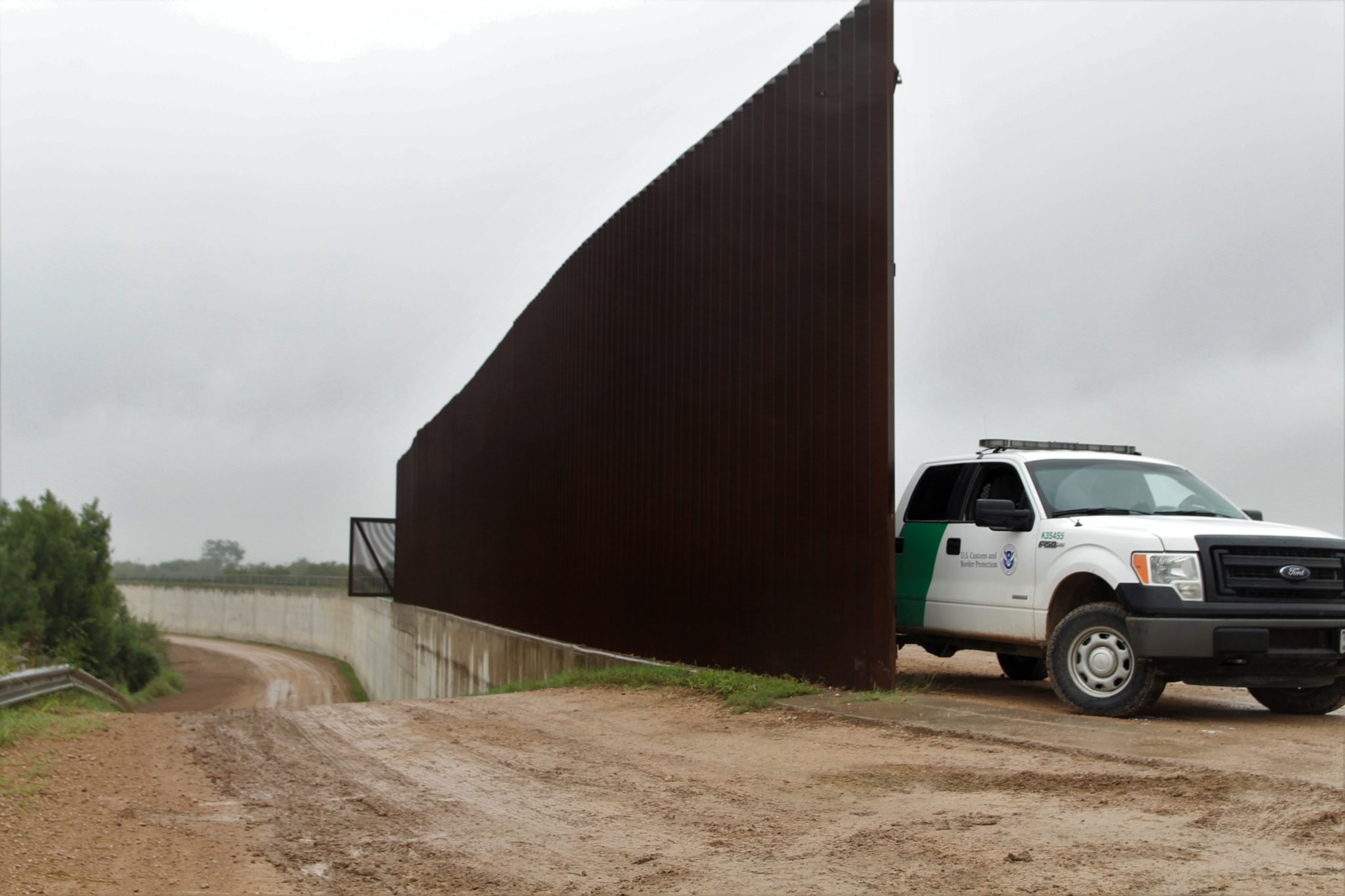 The border wall and a Border Patrol pickup in Hidalgo County in 2018 (Gus Bova)
From a young age, we are taught that Mexico is inferior, that our neighbor cities are less developed. These narratives come from a long history that has justified U.S imperialism and neocolonial interventions in other countries. In Harvest of Empire: The Untold Story of Latinos in America, Juan González documents U.S. intervention and its role in destabilizing and overthrowing democratic structures across Latin America driving displacement and migration. Border militarization exists to protect the stolen wealth that has been accumulated by the United States.
It is time for us to collectively imagine and demand a future without Border Patrol and without Immigration and Custom Enforcement. We have witnessed, locally and now nationally, the consequences of a century-old, violent federal apparatus with total impunity. South Texas has been transformed into a surveillance economy, sustained by massive federal investment in militarization rather than in people.
We cannot continue to accept or rely on jobs that require violence against our own communities. Instead, we need investment in border economies that centers on cultural wealth, protecting local ecosystems, and opportunities that express the collective care we have for each other.
The post My Home Is Treated Like a War Zone. That Militarization Expanded to Minnesota. appeared first on The Texas Observer.




 English (US)